
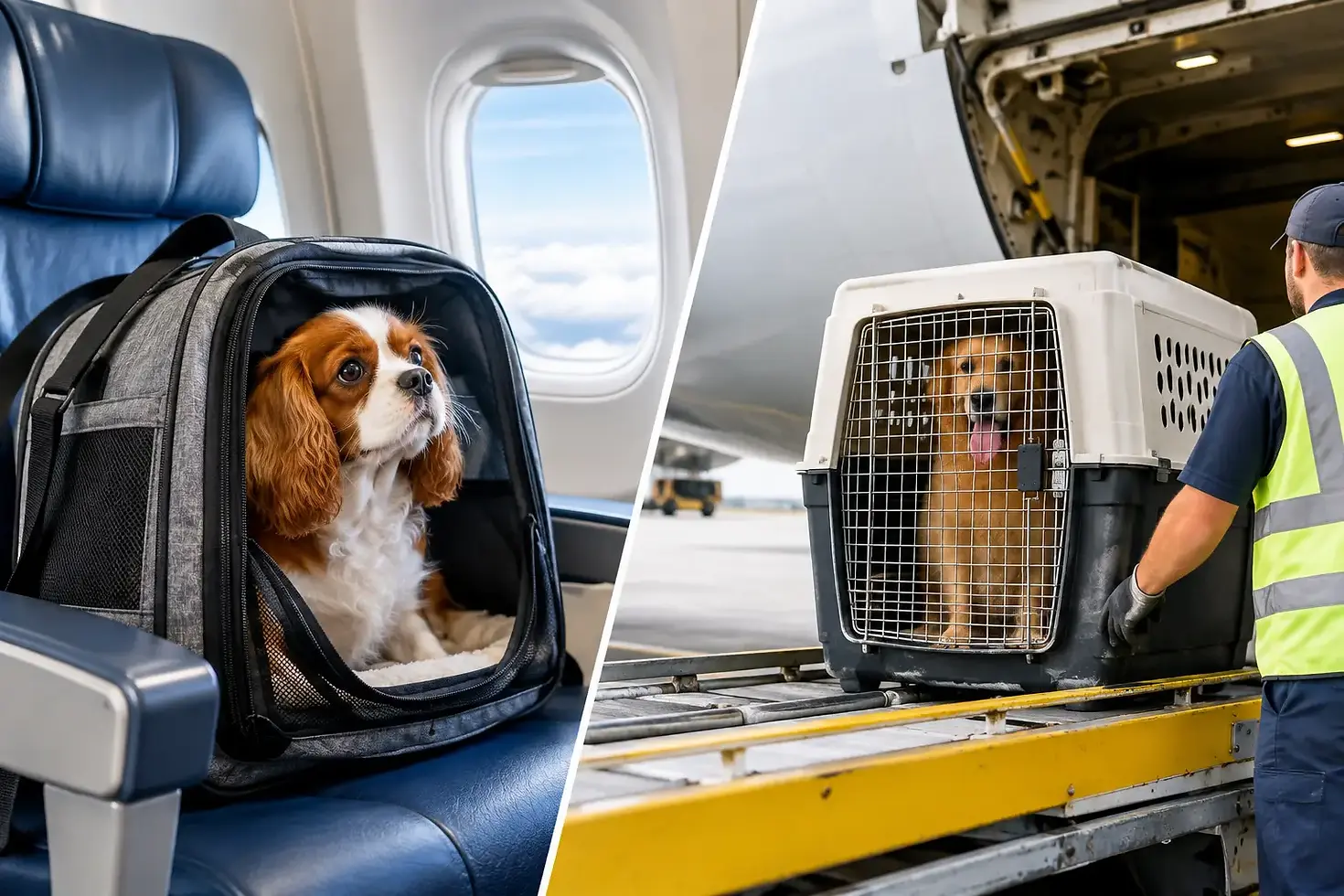
Cabin Travel Versus Cargo Holds for Pets

When your pet needs to travel without you, the question is rarely just, “What is the cheapest flight?” It is, “Where will my pet be safest and most comfortable?” Cabin travel versus cargo holds is one of the biggest decisions in arranging air transportation for a dog, cat, or other companion animal. The right answer depends on your pet, the route, the airline’s policies, and the care available before, during, and after the flight.
For many families, having a pet travel in the cabin feels immediately more reassuring. For others, a cargo arrangement may be the only practical option, especially for larger dogs. Neither choice should be made on assumption alone. A thoughtful plan begins with an honest look at what your pet needs to arrive healthy, calm, and cared for.
Cabin Travel Versus Cargo Holds: The Key Difference
Cabin travel means your pet flies inside the passenger area of the aircraft, usually in an airline-approved carrier placed beneath the seat in front of the traveler. A flight nanny may accompany the pet through check-in, security, boarding, and arrival, providing direct human oversight throughout the trip.
Traveling in a cargo hold generally means a pet is checked for transport in a secure travel kennel and flown in a designated area below the passenger cabin. On many commercial flights, that area is pressurized and may be temperature controlled, but conditions, availability, and handling procedures vary by airline, aircraft type, season, and airport.
The difference is not simply upstairs versus downstairs. It is the level of direct observation, the amount of handling involved, the pet’s size and temperament, and how many moving parts are built into the itinerary.
Why Cabin Travel Often Brings More Peace of Mind
A pet traveling in the cabin remains close to a responsible person for much of the journey. That can be especially valuable for small dogs, cats, young pets, senior pets, and animals that become uneasy in unfamiliar environments. A flight nanny can monitor the carrier, offer reassurance when appropriate, and make sure the pet is transferred carefully through each stage of the trip.
Cabin travel also reduces some of the handoffs that can make owners nervous. Instead of being taken to a separate cargo facility, the pet stays with the traveler from the airport through the flight and into the arrival terminal. For a family that cannot make the trip themselves, this human-centered approach can feel much closer to the care they would provide personally.
That said, cabin travel has real limits. Airlines set strict rules for carrier dimensions, combined pet-and-carrier weight, breed restrictions, and the number of pets allowed onboard. A pet must generally be able to stand, turn around, and lie down comfortably inside a carrier that fits under the seat. A large Labrador, German Shepherd, or Great Dane will not fit this option, no matter how calm or well trained they are.
Cabin travel can also be demanding for pets that dislike confined spaces, crowded terminals, unfamiliar sounds, or extended time in a soft-sided carrier. Being near people is not automatically less stressful for every animal. The best option is the one that fits the individual pet, not simply the one that sounds best on paper.
When a Flight Nanny May Be a Good Fit
A flight nanny arrangement can work well when a pet meets cabin requirements and the owner wants attentive care along the way. It is particularly helpful for families welcoming a puppy from another state, military households coordinating a move, or pet owners who cannot travel due to work, health, or family obligations.
The value is not just the seat on the plane. It is having someone responsible for the full handoff: confirming travel details, keeping the pet secure, communicating during the trip, and delivering the pet to the right person at the destination. For anxious owners, consistent updates can make a long travel day feel far more manageable.
When Cargo Hold Travel May Be Necessary
For large dogs and pets that cannot meet cabin carrier requirements, cargo transport may be the available air-travel option. It can also be necessary on certain routes where airlines do not permit pets in the cabin or where a pet’s size, species, or travel documentation affects eligibility.
A properly sized hard-sided kennel is essential. Your pet should have enough room to stand without crouching, turn around naturally, and lie down comfortably. The kennel should be sturdy, well ventilated, clearly labeled, and prepared according to airline requirements. The wrong kennel is not a minor detail. It can lead to a refused check-in or a far more uncomfortable trip.
Cargo travel deserves extra planning because the pet may be separated from the escort before departure and reunited later after arrival. Weather can matter, too. Airlines may restrict pet cargo travel during periods of extreme heat or cold, and those restrictions are there for good reason. Direct flights are usually preferable because each connection can add waiting time, handling, and uncertainty.
Cargo holds are not automatically unsafe, and cabin travel is not automatically the right choice. But cargo travel requires a provider and itinerary that take details seriously: airline rules, kennel setup, airport timing, weather, direct routing, and a reliable person ready to receive the pet.
Consider Your Pet Before You Consider the Ticket
Your pet’s physical and emotional needs should lead the decision. Size is the obvious factor, but it is not the only one. Age, medical history, temperament, breed characteristics, and prior travel experience all matter.
A tiny dog with severe separation anxiety may not settle easily in a carrier despite traveling in the cabin. A calm, crate-trained large dog may handle a properly planned cargo flight better than an owner expects. Flat-faced breeds may face additional airline restrictions because of breathing concerns. Pets with medical conditions should be discussed with a veterinarian before travel is arranged.
Avoid sedating a pet for air travel unless a veterinarian specifically directs it. Sedation can affect balance, breathing, and temperature regulation at altitude. The goal is not to make a pet sleepy enough to tolerate a bad plan. The goal is to build a travel plan that respects the pet’s needs from the start.
Route Planning Matters as Much as Travel Format
A direct route can be more valuable than a small difference in price. Every layover creates another opportunity for delay, temperature changes, transfers, and confusion. When a direct flight is not possible, the connection should be chosen carefully, with enough time for safe handling but not so much that the pet spends unnecessary hours in transit.
Hawaii and Alaska add another layer of planning. These destinations can involve specific health certificates, vaccination records, inspection requirements, timing rules, and carrier limitations. Missing paperwork may delay your pet’s arrival or create stressful problems at check-in. Families should never assume a domestic trip means simple paperwork.
Ground transportation may also be worth considering for some routes, especially when flying would require an indirect itinerary or a cargo arrangement that does not feel appropriate for the pet. The best plan may combine services rather than force every pet into the same transportation model.
Questions to Ask Before Booking
Before agreeing to any air transport plan, ask how your pet will travel, who will be responsible at each stage, and what happens if a flight is delayed or canceled. Ask whether the route is direct, what airline policies apply to your pet’s breed and size, and what documentation is required.
You should also know how and when you will receive updates. Reliable communication is not an extra when a family pet is hundreds or thousands of miles away. It is part of responsible care. A trustworthy transport partner should explain the process in plain language, set realistic expectations, and be willing to discuss alternatives when the first option is not the best fit.
At Paws n' Relax, we believe pets deserve to be treated like family throughout the journey, not like a shipment with a tracking number. That means considering the travel format, route, timing, and handoff as one complete care plan.
The safest choice is rarely the one made fastest. Give your pet’s trip the same care you would give their daily routine: choose the route thoughtfully, ask direct questions, and work with people who understand that getting there safely is what matters most.


Comments