
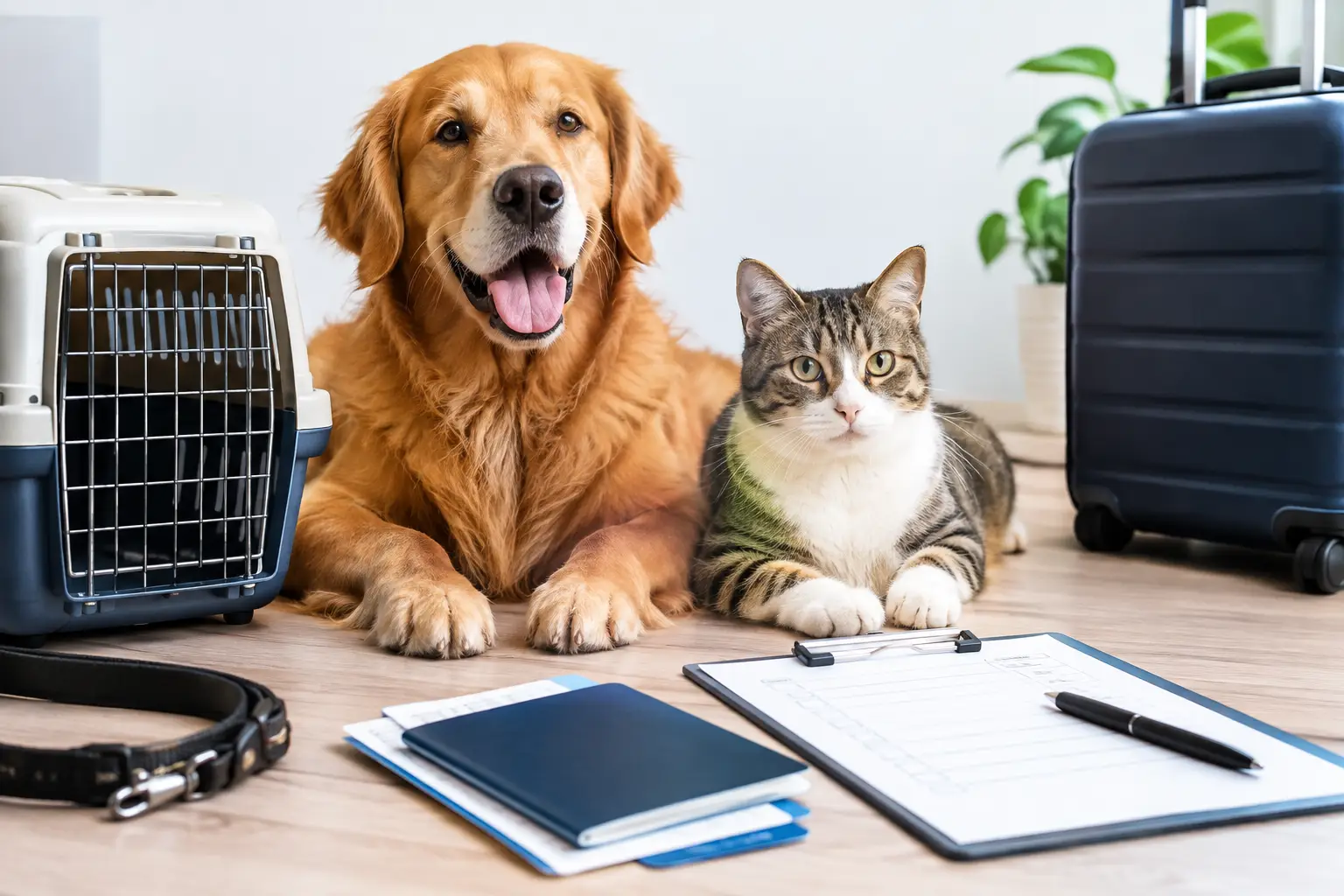
Essential Documents for Pet Flights Checklist

A missed form can turn a carefully planned pet trip into a stressful delay at check-in. The essential documents for pet flights are not identical for every route, airline, or animal, but getting them organized early gives your pet the calmest possible start. Whether your dog is joining a military family after a move, traveling to a new home, or flying on a route to Hawaii or Alaska, paperwork is part of protecting the family member you love.
At Paws n' Relax, we believe preparation is a form of care. We get there when you cannot, but we also help make sure the details are handled before travel day arrives. Here is what pet owners should gather, confirm, and keep within reach.
Essential Documents for Pet Flights
For most domestic pet travel, you will need proof of current vaccinations, a health certificate when required, identification details, and airline or transport paperwork. The exact combination depends on where your pet is leaving from, where they are going, how they are traveling, and the rules in place at the time of departure.
Start early rather than assuming a veterinary visit the week before travel will cover everything. Some documents have narrow timing windows, while certain destinations require advance approval or laboratory testing. A document can be perfectly valid in general and still be too old, too new, incomplete, or missing a required detail for a specific trip.
Vaccination records
A current rabies vaccination certificate is one of the most commonly requested records. It should clearly identify your pet, list the vaccine information and administration date, and be signed or issued by the veterinary clinic. Puppies and kittens may have different eligibility requirements because of their age or vaccination schedule.
Keep the full vaccination history available, not just a photo of a reminder card. Airlines, destination authorities, boarding facilities, and veterinarians may ask for different information. Your veterinarian can help confirm which vaccines are appropriate for your pet and route.
Certificate of veterinary inspection
A certificate of veterinary inspection, often called a health certificate, is completed by an accredited veterinarian after examining your pet. It states that the animal appeared healthy enough for travel and documents key details such as species, breed, age, sex, and vaccination status.
Many interstate trips require this document, but the timing rules vary. It may need to be issued within a certain number of days before arrival or departure, so scheduling the appointment too far ahead can create a problem. Some airlines have their own health certificate standards as well. Always check both the airline policy and the destination state's current requirements before booking the appointment.
A health certificate is not a promise that an animal will never feel anxious or become unwell during travel. It is a professional assessment at a specific point in time. If your pet seems sick, injured, unusually tired, or under significant stress near departure, speak with your veterinarian and transport provider right away.
Identification and ownership information
Your pet should travel with clear identification that connects them to you and to their trip. This usually includes a collar tag with your name and phone number, plus the pet's name, breed, color, age, and any microchip number listed in the travel file.
Bring a copy of your government-issued photo ID and keep the booking confirmation, pickup and delivery addresses, and emergency contacts together. If someone else is releasing or receiving the pet, provide their full contact details in advance. Clear handoffs matter just as much as airport paperwork.
A microchip is not always required for domestic travel, but it is a valuable backup when the number is registered and current. Make sure the registration has your present phone number, email address, and emergency contact. A microchip only helps if the contact information leads back to you.
Airline and transport authorization paperwork
Each airline sets its own rules for pets traveling in cabin, as checked animals, or through cargo services. There may be pet reservations, carrier measurements, breed restrictions, weather limitations, age requirements, and signed acknowledgment forms. A flight that accepts a small pet in cabin may not accept the same pet under another travel arrangement.
If a professional transport team is coordinating the trip, you may also need to complete an owner authorization form and provide medical, feeding, and behavior information. Be honest about medication, anxiety, mobility needs, bite history, or anything that could affect safe handling. This is not about judging your pet. It helps the people caring for them make good decisions.
Hawaii and Alaska Need Extra Attention
Hawaii is not a standard domestic pet destination. Its rabies prevention rules are designed to protect the islands, and the paperwork process can involve microchip verification, rabies vaccination records, a rabies antibody blood test, waiting periods, an import form, and a required health certificate. Timing is critical. A missed deadline can affect your pet's release or create quarantine-related complications.
Do not rely on an old checklist from a friend or a social media post. Requirements can change, and your pet's prior vaccination dates affect the available travel timeline. Begin planning well before the desired travel date, then verify every requirement with the proper state authorities, airline, and veterinarian.
Alaska travel can bring a different set of challenges. Documentation requirements may depend on the animal, point of origin, airline, and local destination. Cold weather can also affect flight operations and pet acceptance, particularly when animals travel outside the cabin. A health certificate, vaccine records, and careful coordination are often central to a smooth Alaska trip, but do not treat this as a one-size-fits-all route.
Build a Travel Folder, Not a Stack of Loose Papers
A calm travel day begins with documents that are easy to find. Put original records in a waterproof folder, then keep legible copies in a second location. Digital photos or scans on your phone are useful backups, but they may not replace originals where an original signature or official form is required.
Your folder should include these distinct items:
Current rabies certificate and complete vaccination record
Health certificate or certificate of veterinary inspection, if required
Airline booking details and any signed airline pet forms
Pet identification details, microchip information, and recent clear photos
Owner identification, emergency contacts, and pickup or delivery authorization
Destination-specific permits, import forms, laboratory results, or approvals
Label each file with your pet's name and travel date. If more than one pet is traveling, keep each animal's paperwork separate. Similar-looking records are easy to mix up when a family has multiple dogs or cats.
Ask These Questions Before You Confirm a Flight
Before you finalize travel, ask whether the airline accepts your pet's breed, size, age, and travel format on that route. Confirm the carrier requirements, check-in timing, documentation deadline, and weather policy. For a flight with connections, ask whether every segment follows the same pet policy. The answer is not always yes.
Also ask your veterinarian whether your pet is medically suited for the trip. Flat-faced breeds, very young animals, senior pets, pets with respiratory conditions, and animals with significant anxiety may need additional consideration. Sedation is generally not a casual travel solution. Only use medication under direct veterinary guidance, and disclose it to the people responsible for transport.
If your dates are flexible, give yourself room for a document correction, a weather change, or an airline adjustment. The lowest-priced flight is not always the best choice if it leaves no margin for your pet's welfare.
A Better Way to Handle Last-Minute Changes
Even the best-planned travel can change. A veterinarian may need to correct a date, a flight may be delayed, or a destination rule may require another step. Keep your veterinarian's phone number, airline reservation number, and transport contact saved before departure day. If something changes, communicate quickly instead of hoping it will work itself out.
For owners using a pet transport service, share documents as soon as they are available and send updated versions immediately. A high-touch transport partner can help flag missing details and coordinate the journey, but the owner is still responsible for accurate information and required approvals.
Your pet cannot tell the check-in desk that their vaccine record is in the wrong bag or that the health certificate was issued one day outside the allowed window. A well-prepared folder gives them the advocate they need before the trip even begins. Start with the documents, leave room for questions, and let every detail say the same thing: this family member is expected, protected, and deeply cared for.


Comments