
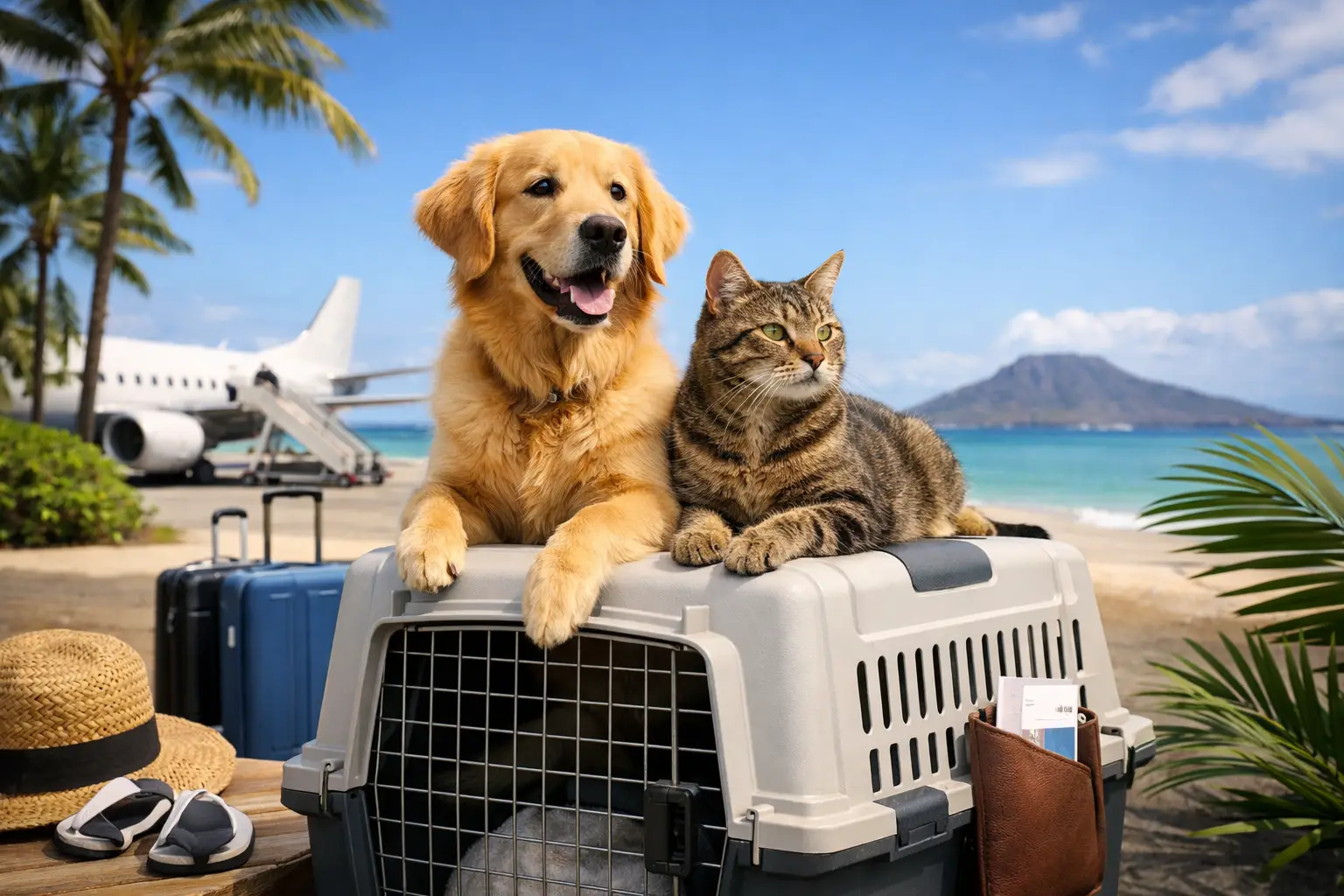
How to Relocate Pets to Hawaii Without Surprises

A move to Hawaii can feel like a fresh start, but for your dog or cat, the trip begins months before departure. Knowing how to relocate pets to Hawaii means understanding that the islands have some of the country’s strictest animal-entry rules. Those rules exist to protect Hawaii’s rabies-free status, and missing one deadline can mean quarantine, extra expense, and a stressful start for your pet.
The good news is that a well-planned move is absolutely manageable. Start early, keep every document organized, and choose travel support that fits your pet’s temperament and your family’s schedule. Your pet is not cargo to be checked off a list. They are family, and the plan should reflect that.
Why Hawaii Pet Relocation Takes More Preparation
Unlike most domestic moves, bringing a pet to Hawaii involves a state-administered animal quarantine process. Hawaii requires specific identification, rabies vaccination history, blood testing, documents, and arrival procedures before a pet can qualify for direct release or a short quarantine program.
The biggest challenge is timing. Some requirements must be completed well before the flight, and one late lab result or missing signature can change your arrival plan. Airlines also have their own rules for kennel dimensions, weather restrictions, seasonal cargo policies, and check-in timing. A pet that meets Hawaii’s entry requirements may still need a different flight plan based on the airline’s current policies.
That is why we encourage families to begin planning at least several months ahead whenever possible. If you are moving on military orders, accepting a new job, or working around a lease deadline, give yourself even more breathing room than you think you need.
How to Relocate Pets to Hawaii Step by Step
Start with a veterinarian who understands travel timelines
Book a veterinary appointment as soon as Hawaii becomes part of your plan. Your veterinarian can review your pet’s age, health, microchip status, vaccination records, and whether they are fit to fly. This is also the time to discuss anxiety, motion sickness, breathing concerns, and any medications your pet takes.
Pets with short noses, such as pugs, French bulldogs, Persian cats, and similar breeds, can face additional airline restrictions because of respiratory risk. Senior pets, very young animals, and pets with certain medical conditions may need a more customized transport plan. There is no one-size-fits-all answer, and a caring provider will be honest about what is safest for your animal.
Confirm microchip and rabies requirements early
Hawaii’s entry process relies heavily on a readable microchip and documented rabies vaccinations. The microchip number must match every record exactly. A single transposed number, an unreadable chip, or a vaccination given in the wrong sequence can create serious delays.
Your veterinarian should help you confirm the required rabies vaccination history and schedule the necessary rabies antibody blood test through an approved laboratory. This test is often called an OIE-FAVN rabies antibody test. Because lab processing and required waiting periods can affect your move date, this is one of the first tasks to handle.
Keep copies of everything: microchip records, rabies certificates, blood-test results, veterinary notes, and any communications related to your pet’s entry. Save digital copies, but also travel with printed copies in a clearly labeled folder. When a pet’s paperwork is reviewed, clear records bring peace of mind.
Complete Hawaii’s import paperwork carefully
Hawaii requires owners to submit specific documents and fees for its pet-entry program. Depending on your itinerary and where your pet will arrive, you may also need to arrange for inspection and direct airport release in advance.
Do not assume that landing in Hawaii is the same as being cleared to leave the airport. Direct release depends on your pet meeting all applicable requirements before arrival and on the paperwork being received and accepted on time. If your documents are incomplete, your pet may need to remain in quarantine while the issue is resolved.
Requirements and procedures can change, so confirm the current Hawaii Department of Agriculture rules before committing to a flight. Your veterinarian and professional pet transport partner can help you understand the process, but the pet owner remains responsible for accurate, complete documentation.
Choose the flight route around your pet, not just the ticket price
A nonstop flight is often the least complicated option, particularly for pets traveling in cargo. Fewer connections generally mean fewer handoffs, less waiting, and fewer chances for a weather delay to disrupt the plan. Still, the right route depends on the origin city, airline availability, breed restrictions, and whether your pet is eligible to travel in cabin, with a flight nanny, or through an airline’s pet cargo program.
For a small pet that can safely fit in an airline-approved carrier under the seat, in-cabin travel may be a good choice. Some families prefer a flight nanny service when they cannot travel themselves and their pet qualifies for cabin travel. Larger dogs often require a cargo arrangement, which calls for extra attention to crate training, airport procedures, temperature conditions, and flight timing.
Paws n' Relax helps families consider those details before travel day, including the transport format that best serves the pet rather than simply the easiest option on paper. The goal is always a calm, safe handoff and clear communication from pickup through arrival.
Prepare the travel crate well before departure
The travel crate should be airline-compliant, appropriately sized, secure, and familiar to your pet. Your dog or cat should be able to stand, turn around, and lie down comfortably. A crate that is too small can be refused by an airline. A crate that is too large may be harder to manage safely.
Start crate conditioning weeks ahead of the trip. Leave the crate open at home with familiar bedding or a safe comfort item inside. Offer meals near it, then inside it, so the crate becomes a normal resting place rather than a scary surprise on travel day.
Avoid putting anything in the crate that could become a hazard during transport. Follow airline instructions on water containers, absorbent bedding, food, labels, and required live-animal markings. If your pet has a favorite toy, ask whether it is appropriate for the specific travel arrangement before packing it.
What Happens When Your Pet Arrives in Hawaii
When the plane lands, your pet will be handled according to the approved entry plan. Pets arriving through a direct-release process are inspected and checked against their documents. Pets whose records are missing, incorrect, or not approved in time may be transferred for quarantine processing.
Arrival airport matters. Honolulu is often the simplest entry point for pet inspection, while direct entry to certain neighbor islands may involve additional approvals and scheduling. If your final home is on Maui, Kauai, the Big Island, Lanai, or Molokai, build the interisland portion of the trip into your plan instead of treating it as an afterthought.
Arrange a quiet first day after arrival. Offer water, a familiar meal, a bathroom break, and a calm space away from movers, visitors, or loud activity. Jet lag is not just a human issue. Your pet may be tired, overstimulated, or unsure after a long travel day.
Common Mistakes That Can Delay a Hawaii Move
Most problems are preventable, but they usually begin with a rushed timeline. Watch for these common issues:
Scheduling the rabies blood test too close to the intended flight date.
Using paperwork with a microchip number that does not match every other record.
Booking a flight before confirming airline breed, crate, and weather policies.
Mailing or submitting Hawaii documents after the required deadline.
Assuming a connecting route or neighbor-island arrival follows the same process as a Honolulu arrival.
If your move date is close, do not guess. Ask the right questions early and be prepared to adjust the flight date if that is what protects your pet from a difficult arrival.
Give Your Pet a Plan They Can Feel Safe In
Relocating to Hawaii takes organization, patience, and a willingness to plan around your pet’s needs. The paperwork matters, but so does the human side of the trip: a familiar voice at pickup, an appropriate crate, thoughtful flight timing, and updates that let you breathe while your pet is in someone else’s care.
The best move is not the one that looks fastest on a calendar. It is the one that gives your pet the best chance to arrive healthy, settled, and ready to begin life with you in their new home.


Comments