

Puppy Transport That Puts Safety First
- Paws n Relax
- Jun 28
- 6 min read

Bringing home a puppy should feel exciting, not stressful. But when miles, flight schedules, military moves, breeder handoffs, or remote destinations get in the way, puppy transport becomes more than a convenience. It becomes a trust decision.
That is why the right transport plan is never just about getting from point A to point B. A young dog needs careful timing, age-appropriate handling, clean travel conditions, and regular human attention along the way. For many families, the biggest question is not whether transport is possible. It is whether their puppy will be safe, comfortable, and genuinely cared for while traveling.
What good puppy transport really means
A puppy is not the same as an adult dog in transit. Young dogs tire faster, need more reassurance, and can be more sensitive to temperature changes, noise, unfamiliar people, and disruptions in routine. Even a confident puppy can have a rough trip if the plan is rushed or the handling is impersonal.
Good puppy transport starts with matching the trip to the puppy, not forcing the puppy into a one-size-fits-all route. That can mean ground transport for some trips, a flight nanny for others, or more customized arrangements when timing or destination makes things more complicated. The goal is not simply movement. The goal is safe arrival with as little stress as possible.
That is also why communication matters so much. Pet owners are not handing off a package. They are placing a young family member in someone else’s care. Clear updates, honest timelines, and direct answers go a long way toward making the process feel manageable.
When families usually need puppy transport
Most people who book transport are doing it because life is pulling them in two directions at once. Maybe they are relocating for work and cannot safely manage the drive with a very young dog. Maybe they are a military family dealing with a time-sensitive move. Maybe they found the right puppy through a breeder or adoption situation in another state and need help bringing that puppy home.
There are also more complex situations, especially when the destination is Hawaii or Alaska. Those routes often involve extra planning, health documentation, timing requirements, and tighter coordination. In cases like that, experience matters because small mistakes can create major delays.
The best transport providers understand that behind every booking there is usually a story. Someone is waiting at the other end, often counting the hours until their puppy arrives.
Choosing the right type of puppy transport
Not every puppy should travel the same way. The best option depends on age, breed, size, health needs, destination, and how quickly the puppy needs to arrive.
Ground transport
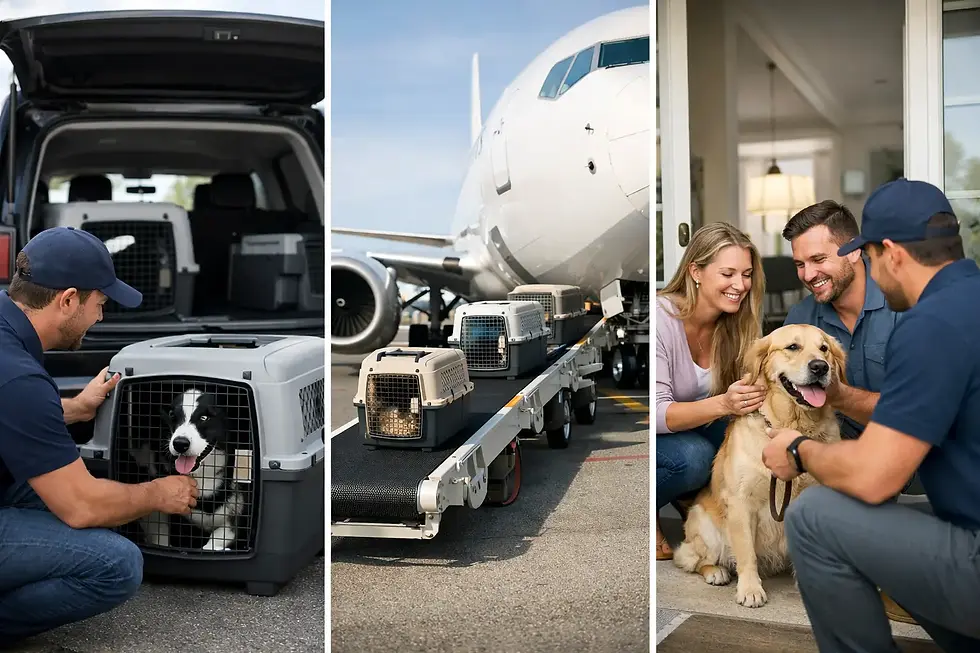
Ground transport can be a strong fit for domestic routes, especially when a puppy benefits from a quieter pace and more frequent care stops. A well-planned road trip can allow for hands-on monitoring, cleaning, hydration, and rest breaks as needed. For some puppies, that is less overwhelming than the airport environment.
That said, longer drives are not always the best answer. For cross-country routes, a road trip may mean more total travel time. That trade-off can still make sense, but it should be weighed carefully.
A flight nanny service is often a good choice when the goal is to shorten travel time while keeping the puppy accompanied by a dedicated human caregiver. Instead of being treated like cargo, the puppy travels with a trained escort who monitors comfort and safety throughout the trip.
This option can be especially reassuring for families who want a more personal level of attention. It can also be useful when timing matters, or when the route makes air travel more practical than a long drive.
Some situations call for more flexibility. Maybe the puppy has specific care needs. Maybe the route is unusual. Maybe the owner wants more direct coordination from pickup to delivery. A custom or VIP approach can make sense when standard options do not fit well.
The important thing is to choose based on the puppy’s needs, not just on price or speed.
How to tell if a transport provider is trustworthy
A reliable puppy transport company should make you feel calmer, not more confused. If the process feels vague, rushed, or overly sales-driven, pay attention to that.
A trustworthy provider will usually ask for meaningful details before quoting or scheduling. Expect questions about the puppy’s breed, age, weight, vaccination status, origin, destination, and timing. That is a good sign. It shows they are planning around the animal, not just filling a route.
You should also look for direct communication and realistic expectations. No transport partner can control every delay caused by weather, airline changes, or route conditions. But they should be able to explain how they handle those issues and how they keep owners updated if plans shift.
Experience helps too, especially with puppies and complex routes. There is a big difference between moving animals in theory and doing it day after day with care, patience, and accountability. At Paws n' Relax, that hands-on approach is a big part of what families are really paying for.
Preparing your puppy for transport
A smooth trip starts before pickup day. Preparation does not need to be complicated, but it does need to be thoughtful.
Make sure your puppy meets age and health requirements for the planned route. Have vaccination records, any required health certificates, and feeding instructions ready. If your puppy is still very young, confirm what is appropriate with your veterinarian and your transport provider so there are no surprises.
It also helps to send familiar items when allowed, such as a small blanket or soft item with the scent of home. That bit of familiarity can make a real difference during travel. Feeding should also be discussed in advance. Puppies need care that fits their age and routine, but overfeeding right before travel can cause discomfort.
One more thing matters here: honesty. If your puppy is anxious, especially tiny, prone to motion sickness, or has any recent medical concerns, say so up front. Good transport planning depends on accurate information.
What the trip should feel like for you
For most owners, the hardest part of puppy transport is the handoff. You are trusting someone else with a pet you may have just chosen, just adopted, or already deeply love. That emotional part is real, and any good provider should respect it.
You should know who is handling your puppy, how the route is being managed, what the expected timing looks like, and how updates will be shared. You should not have to chase people down for basic information. A caring transport experience includes reassurance, not just logistics.
This is especially true for first-time customers. If you have never arranged transport before, it is normal to have questions that feel small or overly cautious. Ask them anyway. The right team will answer without making you feel rushed.
The lowest price is not always the lowest risk
It is tempting to compare transport quotes the way you might compare shipping rates. But puppy transport is not a commodity service. Lower pricing can sometimes reflect shorter planning time, less communication, less individualized care, or transport setups that are simply not a great fit for a very young dog.
That does not mean the most expensive option is automatically best. It means value should be measured by safety practices, handling, route planning, transparency, and the quality of care during the trip.
When people say they want peace of mind, this is usually what they mean. They want to know their puppy is being treated like a living, feeling animal, not just a delivery.
Why personalized care matters in puppy transport
Every puppy is different. Some settle quickly. Some need extra reassurance. Some are tiny and delicate. Some are energetic and curious from the first minute. A transport plan that works beautifully for one puppy may not be the right fit for another.
That is why personalized care matters so much. It creates room for better decisions, from route selection to timing to how the puppy is monitored during travel. It also builds trust with owners, because they can feel the difference between a company that moves pets and a company that cares for them.
If you are considering puppy transport, look for a partner who takes the time to understand your dog, your route, and your concerns. The miles matter, but the care in between matters even more.
The right trip should end with more than a safe delivery. It should end with your puppy arriving calm, protected, and ready to start life at home.


Comments