

A Guide to Transporting Pets Safely Across States
- Paws n Relax
- 5 days ago
- 5 min read

A cross-country move can be exciting right up until you look at your dog curled up on the couch or your cat watching from the windowsill. They do not understand closing dates, military orders, or a new job waiting in another state. They only know their routine is changing. This guide to transporting pets safely is built around one simple goal: helping your companion arrive healthy, calm, and feeling cared for.
The safest trip is rarely the one planned at the last minute or chosen solely because it has the lowest price. It is the one that fits your pet’s health, temperament, size, route, and comfort needs. A confident senior dog may do well with a carefully planned ground trip, while a young puppy traveling a long distance may need a different arrangement altogether.
Start With Your Pet, Not the Route
Before choosing a carrier, a flight, or a transport provider, consider what travel feels like from your pet’s point of view. Age matters. So do breed, medical history, anxiety level, crate experience, and daily habits. A pet that enjoys car rides may handle ground transportation very differently than a pet that becomes distressed during a 20-minute drive.
Schedule a veterinary visit early, especially if the trip involves crossing state lines, flying, or traveling to Hawaii or Alaska. Your veterinarian can confirm whether your pet is fit to travel, update needed vaccinations, discuss medication concerns, and provide health paperwork when required. Some destinations have specific entry rules, and those requirements can take time to meet.
Be honest about special needs. If your pet takes medication, has mobility challenges, is brachycephalic, is very young, or has a history of travel anxiety, those details should shape the plan. Good transport is personal. A one-size-fits-all approach can create avoidable stress for both pets and owners.
Prepare the Essentials Before Travel Day
A smooth trip starts several days before pickup or departure. Pack your pet’s familiar food, written feeding instructions, medications in their original containers, and a copy of health records. Keep enough food for the full trip plus extra in case weather, traffic, or airline schedules change.
Your pet should wear a secure collar or harness with current identification. Make sure the contact number on the tag is one you will answer during travel. If your pet is microchipped, confirm that the registration information is up to date before leaving. A microchip is a valuable backup, but only when the listed contact details are accurate.
For many pets, a familiar-smelling blanket or small toy can provide reassurance. Choose an item that is safe for unsupervised time and will not create a choking risk. Avoid sending irreplaceable belongings. Travel can be unpredictable, and a comfort item should be comforting, not another source of worry.
Help Your Pet Feel Comfortable With the Carrier
For pets traveling in a crate or carrier, familiarity makes a real difference. Set the carrier up at home well before the trip with the door open, bedding inside, and a few treats placed nearby. Let your pet explore at their own pace instead of forcing them inside on travel day.
The carrier should give your pet enough room to stand, turn around, and lie down naturally, while still keeping them secure. It also needs appropriate ventilation and a reliable latch. A carrier that is too large can allow a pet to slide around during movement. One that is too small can make a long trip uncomfortable and unsafe.
Do not use a new carrier for the first time at handoff if you can avoid it. A few calm practice sessions can turn an unfamiliar enclosure into a known resting place.
Choose the Right Transportation Method
There is no single best way to move every pet. The right choice depends on distance, timing, destination, budget, and the level of individual care your pet needs.
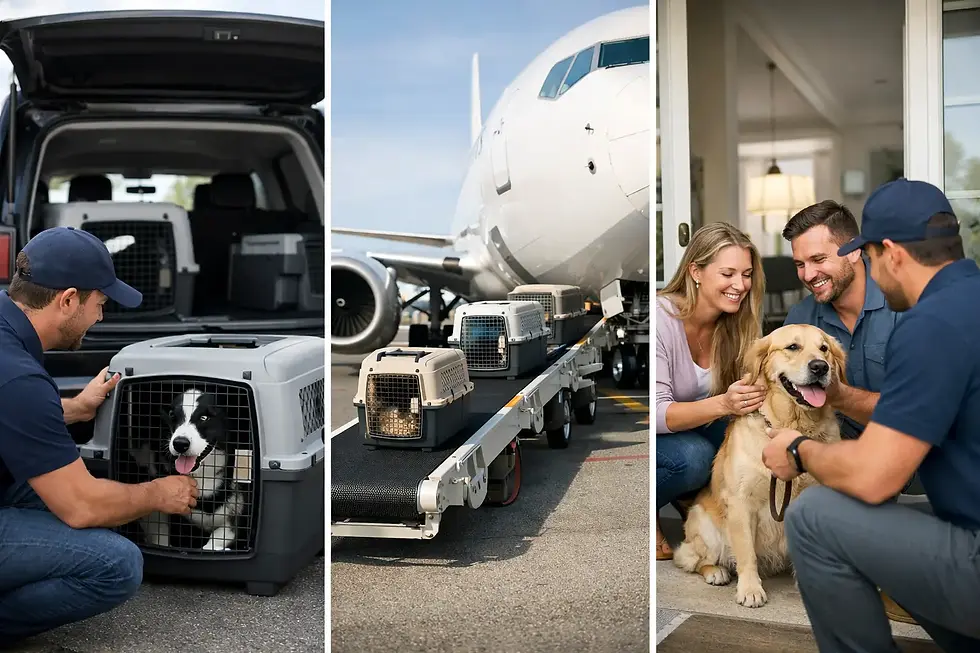
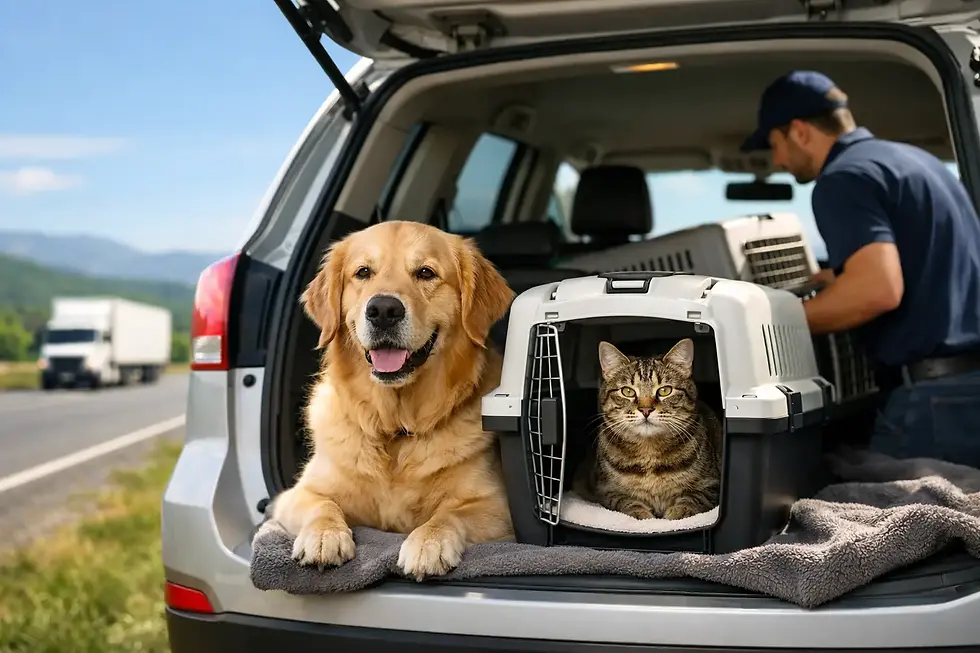
Ground transport can be a strong option for pets who benefit from regular comfort breaks, closer observation, and a less restrictive travel environment. It may also be practical for multi-pet households or routes where flying is not the best fit. The trade-off is time. A cross-country ground trip takes longer, so rest stops, overnight care, temperature management, and communication become especially important.
Air travel can shorten a very long journey, but it requires careful coordination. Flight schedules, carrier requirements, weather, and airport procedures all affect the experience. A flight nanny service may be a good fit for smaller pets that can travel with an attendant in the cabin, depending on airline rules and the pet’s size. This option offers more direct human oversight, though it can cost more than other methods.
VIP transport may make sense when a pet needs dedicated attention, a highly customized route, or a more private travel arrangement. This can be especially reassuring for anxious animals, families with specific timing needs, and pets traveling to remote areas. The best choice is not always the fastest route. It is the route that provides the right balance of safety, care, and realistic logistics.
Questions to Ask a Pet Transport Provider
Handing your pet to someone else takes trust. You deserve clear answers, not vague promises. Ask how the provider plans for feeding, water, rest breaks, and temperature changes. Ask who will be with your pet, how updates are shared, and what happens if a route is delayed.
You should also ask how pickup and delivery are handled. Will your pet be transferred between people or vehicles? What information does the team need about your pet’s behavior, routines, and medical needs? A caring provider will want those details because they help prevent problems before they begin.
Look for communication that feels direct and accountable. You should know who to contact and what to expect during the journey. Photos, check-ins, and honest updates can make a long-distance move feel far less overwhelming. The goal is not to receive constant messages at every mile. It is to know your pet is seen, monitored, and treated with patience.
Be cautious with quotes that seem unusually low but do not explain the service. Price matters, but so does what the price includes. A customized quote should reflect the route, travel format, pet’s needs, timing, and level of care involved.
Travel Day: Keep the Goodbye Calm
Pets often pick up on our stress. On travel day, keep your own routine steady and your goodbye simple. Give your pet an appropriate meal based on the travel plan, allow time for a bathroom break, and avoid introducing new treats or supplements at the last minute.
Share clear instructions with the person handling your pet. Include normal feeding amounts, favorite calming cues, medication schedules, known fears, and anything that helps your companion settle. If your dog gets nervous around loud trucks or your cat only drinks from a certain bowl, say so. Small details often make the biggest difference.
Do not sedate your pet unless your veterinarian has specifically directed you to do so for this trip. Sedation can carry risks, particularly during air travel, and it may make it harder for a handler to recognize changes in your pet’s condition. If anxiety is a concern, discuss safe options with your veterinarian well ahead of time.
Safe Pet Transport Is About Consistent Care
A safe journey is not just a carrier, a vehicle, or a flight reservation. It is a series of thoughtful decisions: checking paperwork early, choosing an appropriate travel method, preparing familiar supplies, and working with people who listen when you describe your pet.
At Paws n' Relax, we understand that pets are family members with their own personalities, habits, and comfort needs. Whether a trip is a few states away or involves the added planning of Hawaii or Alaska, the care should feel personal from pickup through delivery.
When you cannot make the trip yourself, the right plan gives your pet more than a way to get there. It gives them calm hands, a familiar routine where possible, and someone committed to getting them home safely.

Comments